

When couples get stuck in the same arguments, they can spend months or years trying to solve the same problems. One partner pushes for a conversation and the other pulls away. Or someone feels dismissed, so they get louder, while their partner feels criticized and shuts down. Before long, both people feel alone in a relationship they want to work.
Emotionally Focused Couples Therapy (EFT) helps couples understand why these patterns happen and how to change them. It focuses on the emotional bond between partners, the fears that surface during conflict, and the ways each person reaches for connection or protects themselves when the relationship feels uncertain. And these factors often existed long before they even met each other.
EFT offers a focused, research-supported approach to relationship change. The goal is to help couples make meaningful progress in a reasonable period of time, with a clear path toward healthier communication, greater emotional security, and a stronger connection.
Why EFT Can Create High-Impact Change in a Short Time
Couples often seek therapy after years of frustration. They may have tried communicating more carefully, reading relationship books, or making agreements about how to handle conflict. Those efforts can help, but the same painful interactions may keep returning when the underlying emotional pattern stays in place.
EFT works directly with that pattern. Sessions focus on the interactions that cause the most distress and the emotions that partners struggle to express during everyday arguments.
This approach can help couples:
Identify the recurring cycle that fuels their arguments.
Understand the fear, hurt, or loneliness beneath their reactions.
Express emotional needs in ways their partner can hear.
Respond to each other with greater openness and care.
Repair disconnection and build a more secure relationship.
Research supports EFT as an effective treatment for relationship distress, with studies finding improvements in relationship satisfaction for many couples. EFT is also designed as a structured, time-limited treatment. Many couples complete a course of therapy over approximately 8 to 20 sessions, depending on their needs, the severity of their distress, and the progress they make together.
The goal is meaningful change within a purposeful course of treatment. Couples develop new ways of relating that they can carry into their daily lives, with progress guiding the work along the way.
EFT Helps Couples Understand Their Conflict Cycle
One of the most useful parts of EFT is learning to see conflict as a pattern that both partners can work on together.
Consider a couple in which one partner wants to talk through every disagreement while the other needs space when emotions run high. The first partner experiences silence as rejection and pushes harder for a response. The second experiences that pressure as criticism and withdraws further.
Each person's reaction makes the other person's fear feel more convincing. The more one partner pursues, the more the other retreats. The more one retreats, the more urgently the other pursues.
In EFT, the therapist helps the couple understand this cycle and identify the feelings underneath their reactions. The pursuing partner might be afraid they do not matter. The withdrawing partner might fear that anything they say will make things worse.
Those experiences give the couple a new place to begin. Instead of getting caught in another debate about who started the argument, partners can start expressing the hurt, fear, and longing that shape their responses.
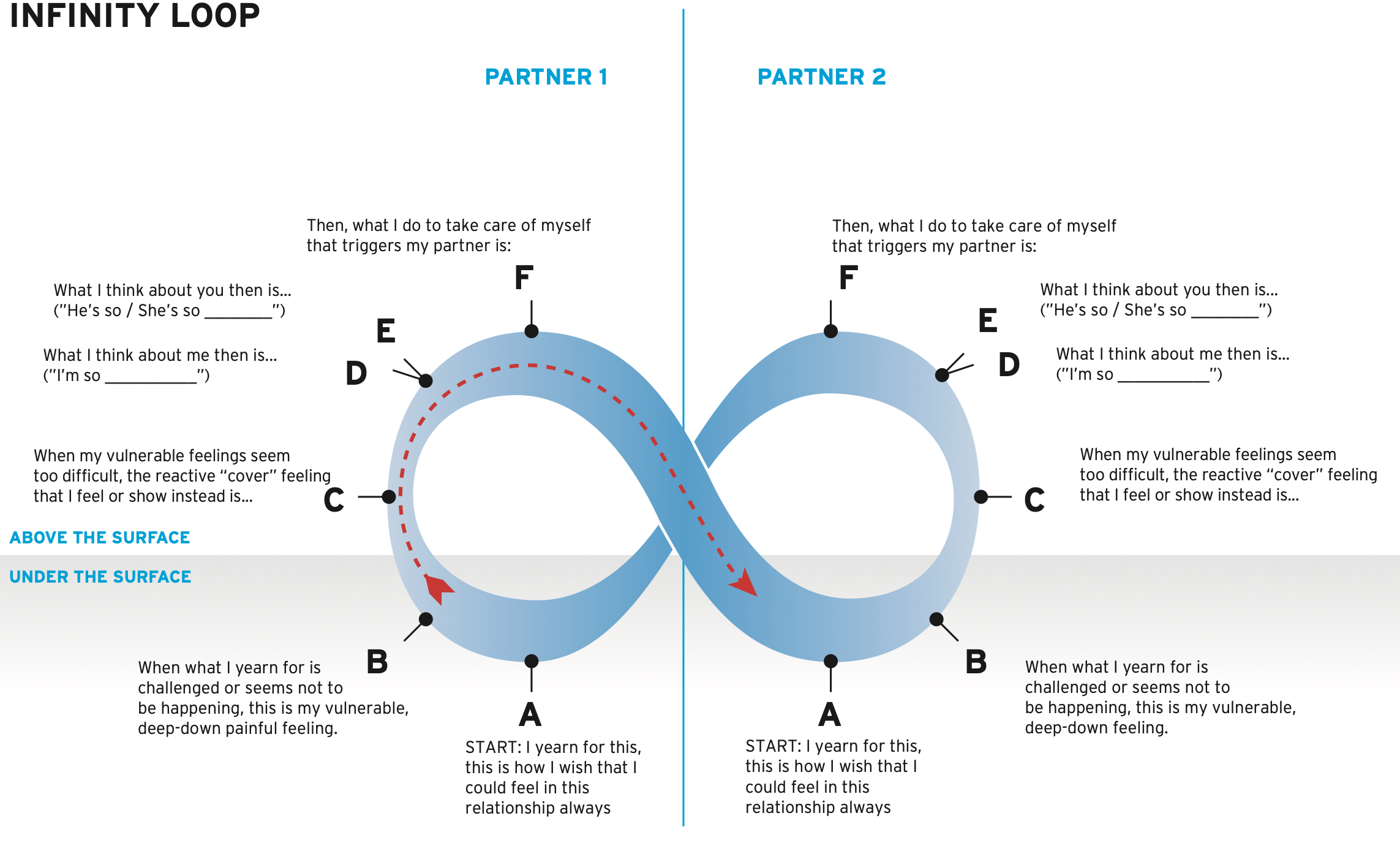
An example of the infinity loop exercise couples will complete within the first few EFT sessions.
Over time, partners practice reaching for each other differently. A partner who usually withdraws may learn to stay emotionally present during a difficult conversation. A partner who tends to pursue may learn to express fear and the need for reassurance without escalating the conflict.
These shifts can change how couples experience each other, including what happens when the next disagreement arises.
What Makes EFT Different From Communication Skills Alone?
Communication skills have a place in healthy relationships. Couples can benefit from learning how to listen, make requests, negotiate differences, and repair conflict. EFT adds another layer by helping partners understand why certain interactions feel so threatening in the first place.
For someone with a history of rejection or emotional neglect, a partner's silence may activate a deep fear of being abandoned. Someone who grew up with harsh criticism may experience feedback as evidence that they are failing again. These reactions can feel immediate and overwhelming, even when the current situation is less threatening than the experiences that shaped them.
EFT gives couples a way to work with these emotional responses inside of the relationship itself. Partners learn to share their vulnerable experiences and respond to each other in ways that build trust.
This is especially helpful for couples who understand their communication problems intellectually but struggle to change them when emotions take over. They may already know they should listen or stay calm. What they need is a different emotional experience with each other, one that makes new responses feel more possible.
The therapist guides these conversations carefully, helping partners move at a pace that supports emotional safety and productive engagement.
Can EFT Help After Years of Relationship Problems?
Yes. EFT can help couples who have spent years caught in painful patterns, including those who feel emotionally distant or question whether their relationship can improve.
Couples seek EFT for many reasons, including:
Frequent arguments that never seem to reach resolution.
Emotional distance or feeling more like roommates than partners.
Trust injuries after infidelity or another betrayal.
Differences in sexual desire, emotional needs, or expectations.
Repeated cycles of pursuing, withdrawing, and feeling misunderstood.
The length of time a couple has struggled is one part of the picture. Their willingness to engage in the work, the presence of ongoing harm, and their capacity to build emotional safety also matter.
EFT helps partners examine how their relationship has come to feel the way it does. It creates space to address the injuries that continue to shape their interactions and practice new ways of responding to each other.
For couples who want to stay together and build a more connected relationship, this process can offer a clear path forward.

Frequently Asked Questions
How long does Emotionally Focused Couples Therapy take?
Many couples complete EFT in approximately 8 to 20 sessions. The length of treatment depends on the couple's goals, the complexity of their relationship concerns, and their progress in therapy.
Is Emotionally Focused Couples Therapy effective?
Research supports EFT as an effective approach for reducing relationship distress and improving relationship satisfaction for many couples. It helps partners change recurring conflict patterns and develop a more secure emotional bond.
What is the difference between EFT and traditional couples therapy?
EFT focuses on the emotional patterns and attachment needs that shape how partners respond to each other. It helps couples create new emotional experiences together while improving their ability to communicate and repair disconnection.
Is EFT a short-term couples therapy approach?
Yes. EFT is structured as a time-limited treatment, often lasting several months. The therapist guides couples toward specific relationship goals and tracks progress throughout the process.
What happens in Emotionally Focused Couples Therapy?
Emotionally Focused Couples Therapy (EFT) follows a structured process designed to help couples change painful patterns and build a more secure connection.
Early sessions: Your therapist helps you understand your relationship history, identify recurring conflict patterns, and see how your reactions affect each other.
Middle sessions: You begin to explore the vulnerable feelings beneath anger, defensiveness, or withdrawal. With your therapist's guidance, you practice expressing your needs and responding to each other in new ways.
Later sessions: You strengthen these changes and learn to navigate conflict, repair disconnection, and respond to each other's emotional needs in everyday life.
Throughout the process, your therapist helps both partners understand their role in the relationship cycle. The goal is to help you feel more connected, handle difficult conversations with greater security, and build a healthier way of relating to each other.
You Deserve Healthy Relationships Once And For All